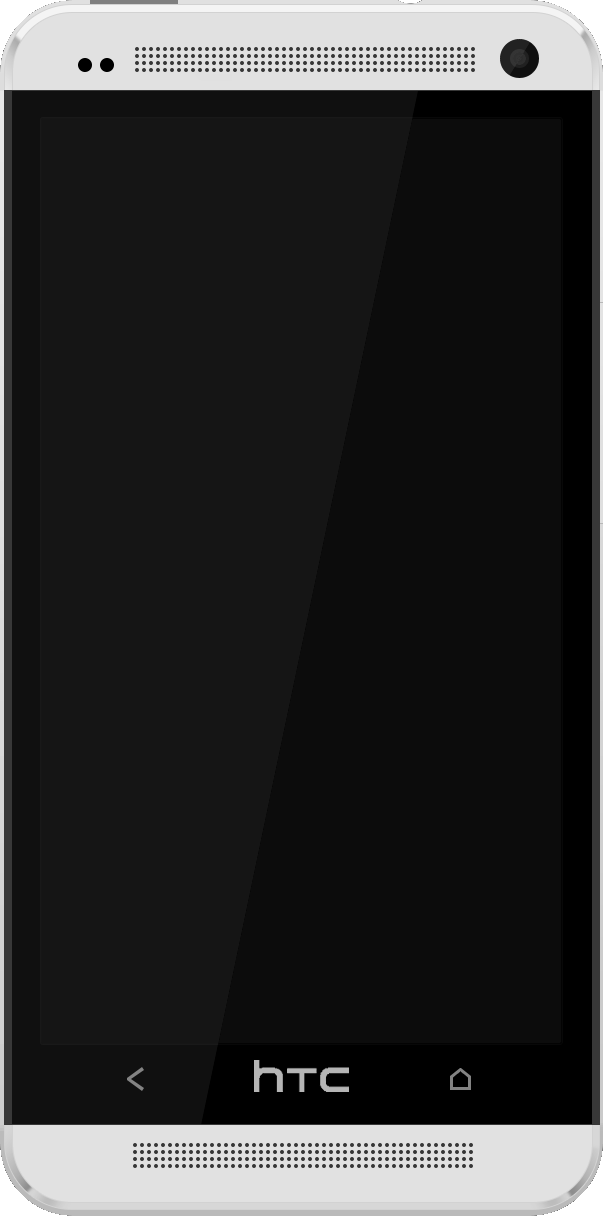
Annoncé le 19 février 2013 à Londres et New York, ventes à partir de mars. Boîtier taillé dans un seul bloc d'aluminium avec « zéro jeu » (le plastique est injecté dans les fentes), Super LCD3 1080p de 4,7" (468 ppi) avec Gorilla Glass 2, Snapdragon 600 à 1,7 GHz, 2 Go de RAM, 32/64 Go. Trois nouveautés clés : caméra UltraPixel de 4 Mpx (pixels de 2,0 µm, f/2.0, OIS), haut-parleurs stéréo frontaux BoomSound avec amplificateurs, interface Sense 5 avec le flux BlinkFeed et la fonction Zoe (photos animées de 3 secondes et « Video Highlights » automatiques). Également un port IR dans le bouton d'alimentation (télécommande Sense TV), 2300 mAh, 143 g, 9,3 mm. Android 4.1.2 → 5.0.2 Lollipop (Sense 6). Argent, noir, rouge, bleu, or. Élu « Meilleur smartphone 2013 » aux GSMA Awards, mais seulement ~5 millions d'unités vendues. Variantes : One Google Play Edition (Android pur), One Dual SIM (Asie, microSD), One mini, One max, Verizon One (avec retard jusqu'en août 2013).
Caractéristiques
| OS | Android 4.1.2 → 5.0.2 + HTC Sense 5 → 6 |
|---|---|
| Processeur | Qualcomm Snapdragon 600 APQ8064T, 4×1,7 GHz, Adreno 320 |
| RAM | 2 Go |
| Mémoire | 32 / 64 Go, sans microSD (Dual SIM — avec microSD) |
| Écran | Super LCD3 4,7" 1920×1080, 468 ppi, Gorilla Glass 2 |
| Appareil photo | UltraPixel 4 Mpx 2,0 µm, f/2.0, OIS, 1080p HDR + 2,1 Mpx 88° 1080p |
| Son | BoomSound : 2 haut-parleurs frontaux avec amplificateurs, Beats |
| Connectivité | LTE, HSPA+, Wi-Fi ac, Bluetooth 4.0, NFC, port IR, MHL, DLNA |
| Batterie | 2300 mAh, non amovible |
| Dimensions | 137,4×68,2×9,3 mm, 143 g |
| Nom de code | M7 |
Données de Wikipedia (en)
| Fabricant | HTC |
|---|---|
| Gamme | HTC One |
| Nom de code | M7 |
| Sortie | 2013-03-22 |
| Type | Smartphone |
| Format | Slate |
| OS | Original: Android 4.1.2 Jelly Bean; Current: Android 5.0.2 "Lollipop" (HTC Sense); Current: Android 5.1 "Lollipop" (Google Play Edition); Unofficial: Android 11 via LineageOS |
| SoC | Qualcomm Snapdragon 600 APQ8064 |
| Processeur | 1.7 GHz quad-core Krait 300 |
| GPU | Adreno 320 |
| RAM | 2 GB LPDDR2 RAM |
| Stockage | 32 or 64 GB |
| Carte mémoire | None (international), up to 64 GB microSDXC (China and Japan) |
| Écran | 4.7 in Super LCD 3 with RGB matrix; 1920×1080p pixels (16:9 Aspect ratio) (468 ppi); Corning Gorilla Glass 2.0 |
| Caméra arrière | 4.0-megapixel, 2.0 μm camera with autofocus, UltraPixel BSI image sensor, smart LED flash, F2.0 aperture, 28 mm lens, dedicated imaging chip, continuous shooting, 1° optical image stabilization; 1080p HD video recording, video stabilization, slow motion video capture (768 × 432 pixels), HDR video recording |
| Caméra frontale | 2.1-megapixel front camera (1080p for recording and video chat) |
| Son | Qualcomm DAC |
| Connectivité | Wi-Fi: 802.11 a/b/g/n/ac (2.4/5 GHz); GPS & GLONASS; NFC; Bluetooth: 4.0 with aptX; DLNA; Wi-Fi Direct; Miracast; Wi-Fi Hotspot; Infrared; USB 2.0 (Micro-B Port, USB charging); USB On-The-Go 1.3; MHL; HDMI (via MHL); Wireless HDMI; 3.5 millimetres (0.14 in) TRRS; FM-radio |
| Batterie | 2,300 mAh Li-Po |
| Dimensions | 137.4 mm H ; 68.2 mm W ; 9.3 mm D |
| Poids | 143 g |
| Prédécesseur | HTC One X ; HTC Butterfly/Droid DNA |
| Successeur | HTC One (M8) |
| Modèles liés | HTC One Mini ; HTC One Max |
| Autre | Accelerometer, gyroscope, digital compass, proximity sensor, ambient light sensor |
Extrait de Wikipédia
Le HTC One ou HTC One M7 est un smartphone conçu et fabriqué par HTC, sorti en avril 2013.
Source: HTC One — Wikipedia (CC BY-SA 4.0)
Wikipedia (en)
HTC One is a touchscreen-based Android smartphone designed, developed, and manufactured by HTC. The smartphone was unveiled on 19 February 2013 at press events in New York City and London and is HTC's seventh flagship smartphone. It has been hailed by many as a revolutionary Android handset with its premium design and build quality and its emphasis on high end audio. It is the successor to the company's 2012 flagship model, the One X—which was critically acclaimed, but commercially unsuccessful due in part to insufficient marketing efforts. To make the device stand out among its competition, HTC One was developed with a major emphasis on unique hardware and software features; which included a unibody aluminum frame, a 1080p full-HD display, dual front-facing stereo speakers, a camera with a custom image sensor and the ability to automatically generate montages of media, an updated version of HTC's Sense user experience, BlinkFeed—an aggregator of news and social network content, and an electronic program guide app with the ability to serve as a universal remote via an IR blaster located in the device's power button.
Source: HTC One (M7) — Wikipedia (CC BY-SA 4.0)
Modèles associés
Également en 2013
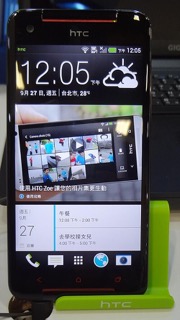 HTC Butterfly S (DLX Plus)Butterfly
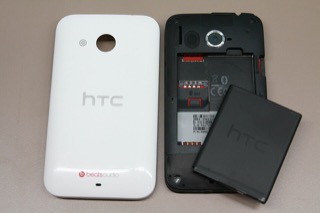 HTC Desire 200Gamme Desire
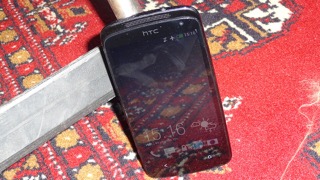 HTC Desire 500 (Z4)Gamme Desire
Rubrique: La série HTC One (2012–2016) · Catalogue des modèles: 2013