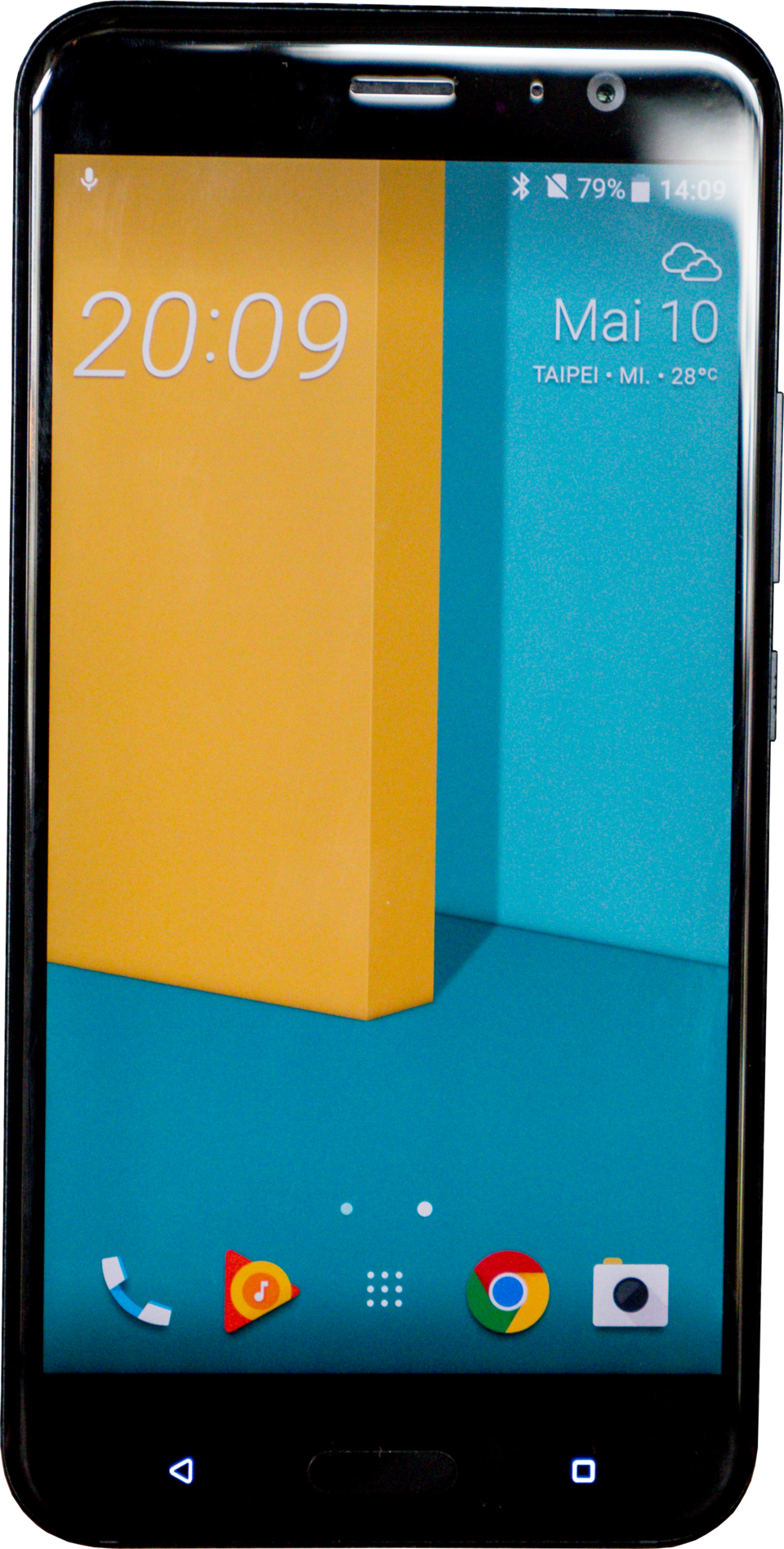
2. November 2017. Ein vergrößertes U11 mit 6,0"-QHD+-18:9-Display (Super LCD6) – das erste „rahmenlose“ HTC, Akku mit 3930 mAh, Fingerabdrucksensor auf die Rückseite verlegt, Snapdragon 835, 4/6 GB, 64/128 GB + microSD, 12 MP UltraPixel 3 mit OIS + 8-MP-Frontkamera, Edge Sense, IP68, BoomSound Hi-Fi, USonic. Ursprünglich als Google Pixel 2 XL entwickelt (Codename muskie), doch Google entschied sich für die Version von LG. Die Besonderheit ist die halbtransparente Rückseite Translucent Black mit sichtbarem Innenleben. Wurde nicht in den USA verkauft. Android 8.0 → 9.0.
Technische Daten
| OS | Android 8.0 → 9.0 + HTC Sense 9 → 10 |
|---|---|
| Prozessor | Qualcomm Snapdragon 835, 8 Kerne |
| RAM | 4 / 6 GB |
| Speicher | 64 / 128 GB + microSD |
| Display | 6,0" 2880×1440 Super LCD6 18:9, Gorilla Glass 5 |
| Kamera | 12 MP UltraPixel 3 OIS + 8 MP |
| Besonderheiten | Edge Sense, IP68, Translucent Black |
| Audio | BoomSound Hi-Fi, USonic, ohne 3,5 mm |
| Biometrie | Fingerabdrucksensor hinten |
| Akku | 3930 mAh, QC 3.0 |
| Abmessungen | 158,5×74,9×8,5 mm, 188 g |
| Codename | Ocean Master / muskie |
Daten aus Wikipedia (en)
| Hersteller | HTC |
|---|---|
| Serie | HTC U |
| Veröffentlicht | U11: 2017-06; U11+: 2017-11 |
| Typ | Smartphone |
| Betriebssystem | U11: Android 7.1 "Nougat" with HTC Sense 9.0; Android 8.0 "Oreo" with HTC Sense 9.0 (without Treble); Android 9.0 "Pie"; U11+: Android 8.0 "Oreo" (with Treble); Android 9 "Pie" |
| SoC | Qualcomm Snapdragon 835 |
| Prozessor | Octa-core (4× & 4×) Kryo |
| GPU | Adreno 540 |
| RAM | 4 or LPDDR4X RAM |
| Speicher | 64 or |
| Speicherkarte | microSD up to |
| Display | U11: Super LCD5 capacitive touchscreen with Corning Gorilla Glass 5, 2560×1440 resolution (~534 ppi pixel density); U11+: Super LCD6 capacitive touchscreen with Corning Gorilla Glass 5, 2880×1440 resolution (~538 ppi pixel density) |
| Hauptkamera | 12 MP (), f/1.7, OIS, UltraSpeed autofocus, dual-LED (dual tone) flash, geo-tagging, touch focus, face detection, auto-HDR, panorama |
| Frontkamera | U11: , 1080p, auto-HDR; U11+: , 1080p, auto-HDR |
| Audio | HTC BoomSound Hi-Fi edition speakers; HTC USonic with Active Noise Cancellation; 3D Audio recording with 4 microphones; Hi-Res audio stereo recording; Hi-Res audio certified |
| Konnektivität | Wi-Fi: 802.11 a/b/g/n/ac, dual-band, Wi-Fi Direct, DLNA, hotspot; Bluetooth: v4.2, A2DP, LE; GPS: Yes, with A-GPS, GLONASS, BDS; NFC: Yes; USB: v3.1, Type-C 1.0 reversible connector (supports DisplayPort) |
| Eingabe | Capacitive touch screen ; Edge Sense |
| Akku | U11: 3,000 mAh Li-ion; U11+: 3,930 mAh Li-ion |
| Abmessungen | U11: 153.9 mm H ; 75.9 mm W ; 7.9 mm D; U11+: 158.5 mm H ; 74.9 mm W ; 8.5 mm D |
| Gewicht | U11: 169 g; U11+: 188 g |
| Vorgänger | HTC 10 |
| Nachfolger | HTC U12+ |
| Verwandt | HTC U Play, HTC U Ultra |
| Sonstiges | U11: IP67 protection; U11+: IP68 protection |
Aus Wikipedia
Das HTC U11 ist ein Android-basiertes Smartphone, das vom Hersteller HTC als Teil seiner U-Serie produziert und verkauft wird. Es wurde am 16. Mai 2017 vorgestellt und ist der Nachfolger des HTC 10.
Quelle: HTC U11 — Wikipedia (CC BY-SA 4.0)
Wikipedia (en)
The HTC U11 is an Android smartphone manufactured and sold by HTC as part of the HTC U series. It was announced on 16 May 2017 and succeeds the HTC 10 smartphone. In the United States, the HTC U11's major carrier is Sprint; however, it is also compatible with unlocked carriers, such as AT&T, T-Mobile, and Verizon.
Source: HTC U11 — Wikipedia (CC BY-SA 4.0)
Verwandte Modelle
Ebenfalls aus 2017
 HTC U Play (Alpine)U-Serie
 HTC U Ultra (Ocean Note)U-Serie
 HTC U11 (Ocean)U-SerieHTC U11 Life (Ocean Life)U-Serie
Bereich: Die HTC-U-Serie (2017–2024) · Modellkatalog: 2017