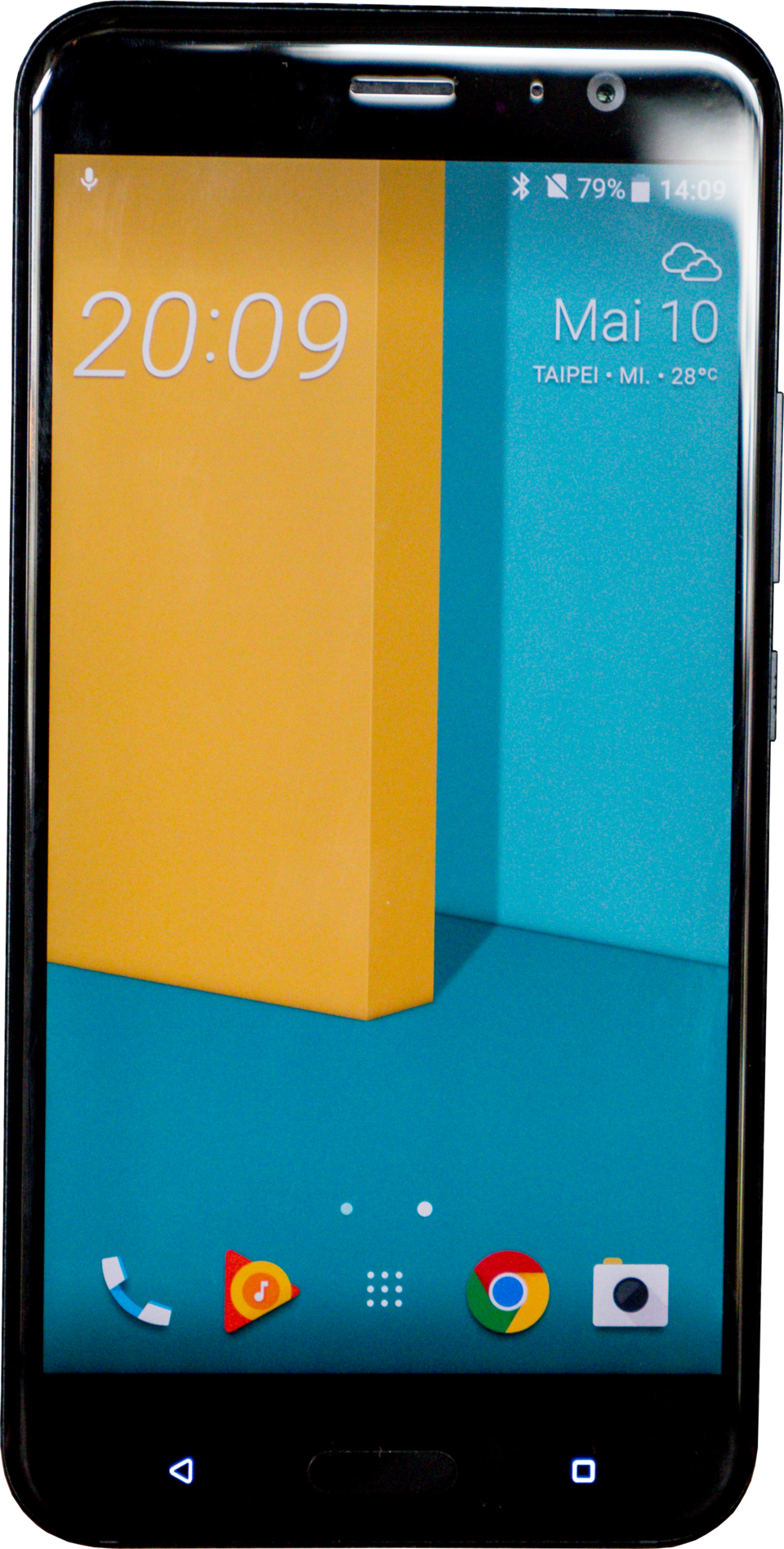
2. November 2017. Mittelklasse mit Edge Sense: 5,2" 1080p Super LCD, Snapdragon 630 mit 2,2 GHz, 3/4 GB, 32/64 GB + microSD, 16 MP + 16 MP, IP67, USonic (ohne 3,5 mm), 2600 mAh, Acrylgehäuse im Stil von Liquid Surface. In Europa im Programm Android One (reines Android 8.0 mit schnellen Updates, bis Android 9), in den USA (T-Mobile, 349 $) mit Sense. 142 g. Eines der ersten Android-One-Geräte, die nicht von Einsteigermarken stammen.
Technische Daten
| OS | Android 8.0 → 9.0 (Android One in Europa / Sense in den USA) |
|---|---|
| Prozessor | Qualcomm Snapdragon 630 SDM630, 8×2,2 GHz |
| RAM | 3 / 4 GB |
| Speicher | 32 / 64 GB + microSD |
| Display | 5,2" 1920×1080 Super LCD |
| Kamera | 16 MP f/2.0 PDAF + 16 MP |
| Besonderheiten | Edge Sense, IP67 |
| Audio | USonic USB-C, ohne 3,5 mm |
| Akku | 2600 mAh, QC 3.0 |
| Gewicht | 142 g |
Daten aus Wikipedia (en)
| Hersteller | HTC |
|---|---|
| Serie | HTC U |
| Veröffentlicht | U11: 2017-06; U11+: 2017-11 |
| Typ | Smartphone |
| Betriebssystem | U11: Android 7.1 "Nougat" with HTC Sense 9.0; Android 8.0 "Oreo" with HTC Sense 9.0 (without Treble); Android 9.0 "Pie"; U11+: Android 8.0 "Oreo" (with Treble); Android 9 "Pie" |
| SoC | Qualcomm Snapdragon 835 |
| Prozessor | Octa-core (4× & 4×) Kryo |
| GPU | Adreno 540 |
| RAM | 4 or LPDDR4X RAM |
| Speicher | 64 or |
| Speicherkarte | microSD up to |
| Display | U11: Super LCD5 capacitive touchscreen with Corning Gorilla Glass 5, 2560×1440 resolution (~534 ppi pixel density); U11+: Super LCD6 capacitive touchscreen with Corning Gorilla Glass 5, 2880×1440 resolution (~538 ppi pixel density) |
| Hauptkamera | 12 MP (), f/1.7, OIS, UltraSpeed autofocus, dual-LED (dual tone) flash, geo-tagging, touch focus, face detection, auto-HDR, panorama |
| Frontkamera | U11: , 1080p, auto-HDR; U11+: , 1080p, auto-HDR |
| Audio | HTC BoomSound Hi-Fi edition speakers; HTC USonic with Active Noise Cancellation; 3D Audio recording with 4 microphones; Hi-Res audio stereo recording; Hi-Res audio certified |
| Konnektivität | Wi-Fi: 802.11 a/b/g/n/ac, dual-band, Wi-Fi Direct, DLNA, hotspot; Bluetooth: v4.2, A2DP, LE; GPS: Yes, with A-GPS, GLONASS, BDS; NFC: Yes; USB: v3.1, Type-C 1.0 reversible connector (supports DisplayPort) |
| Eingabe | Capacitive touch screen ; Edge Sense |
| Akku | U11: 3,000 mAh Li-ion; U11+: 3,930 mAh Li-ion |
| Abmessungen | U11: 153.9 mm H ; 75.9 mm W ; 7.9 mm D; U11+: 158.5 mm H ; 74.9 mm W ; 8.5 mm D |
| Gewicht | U11: 169 g; U11+: 188 g |
| Vorgänger | HTC 10 |
| Nachfolger | HTC U12+ |
| Verwandt | HTC U Play, HTC U Ultra |
| Sonstiges | U11: IP67 protection; U11+: IP68 protection |
Aus Wikipedia
Das HTC U11 ist ein Android-basiertes Smartphone, das vom Hersteller HTC als Teil seiner U-Serie produziert und verkauft wird. Es wurde am 16. Mai 2017 vorgestellt und ist der Nachfolger des HTC 10.
Quelle: HTC U11 — Wikipedia (CC BY-SA 4.0)
Wikipedia (en)
The HTC U11 is an Android smartphone manufactured and sold by HTC as part of the HTC U series. It was announced on 16 May 2017 and succeeds the HTC 10 smartphone. In the United States, the HTC U11's major carrier is Sprint; however, it is also compatible with unlocked carriers, such as AT&T, T-Mobile, and Verizon.
Source: HTC U11 — Wikipedia (CC BY-SA 4.0)
Verwandte Modelle
Ebenfalls aus 2017
 HTC U Play (Alpine)U-Serie
 HTC U Ultra (Ocean Note)U-Serie
 HTC U11 (Ocean)U-SerieHTC U11+ (Ocean Master)U-Serie
Bereich: Die HTC-U-Serie (2017–2024) · Modellkatalog: 2017