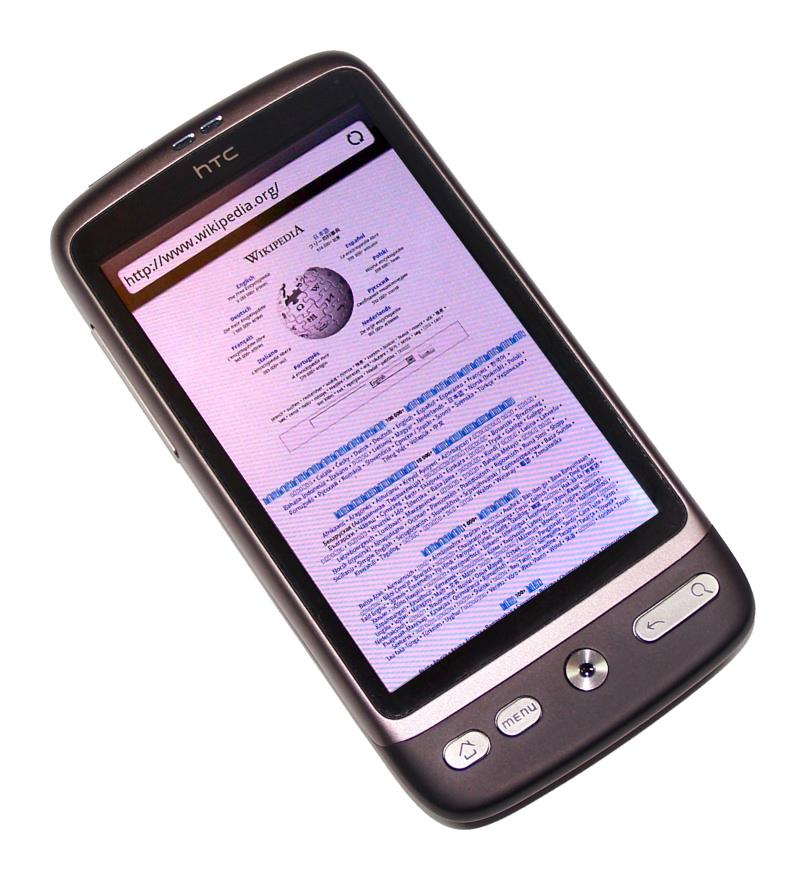
Auf dem MWC am 16. Februar 2010 vorgestellt, Verkaufsstart im April. Faktisch ein Nexus One mit HTC Sense, optischem Trackpad und physischen Tasten: 3,7" AMOLED WVGA (seit August 2010 Super LCD wegen des Engpasses bei Samsung), Snapdragon QSD8250 mit 1 GHz, 576 MB RAM, 5 MP mit LED, Android 2.1 → 2.3 (ICS erschien offiziell wegen Speichermangels nicht). Ein Massenhit in Europa und Asien, „Handy des Jahres“ bei T3, Stuff und vielen anderen Magazinen. In den USA bei US Cellular, Cellular South und Alltel; die CDMA-Version des Desire ist das Droid Incredible (Verizon). Die Marke Desire bestand bis 2024.
Technische Daten
| OS | Android 2.1 → 2.3 + HTC Sense |
|---|---|
| Prozessor | Qualcomm Snapdragon QSD8250, 1 GHz |
| RAM | 576 MB |
| ROM | 512 MB, microSD |
| Display | 3,7" AMOLED / Super LCD 480×800 |
| Kamera | 5 MP AF, LED, 720p (ab 2.2) |
| Konnektivität | HSDPA 7,2, Wi-Fi n, Bluetooth 2.1, GPS, FM, 3,5 mm |
| Akku | 1400 mAh |
| Abmessungen | 119×60×11,9 mm, 135 g |
| Codename | Bravo |
Daten aus Wikipedia (en)
| Hersteller | HTC Corporation |
|---|---|
| Codename | Bravo |
| Veröffentlicht | 2010-02-16 |
| Verfügbarkeit | South Korea |
| Typ | Smartphone |
| Bauform | Slate |
| Betriebssystem | Launched with Android 2.1 "Eclair"; Upgradeable to Android 2.3 "Gingerbread" (Though only 2.2 is supported by HTC) or up to Android 6.0 "Marshmallow" via custom ROM |
| Prozessor | 1 GHz Qualcomm QSD8250 Snapdragon |
| GPU | Adreno 200 |
| RAM | 576 MB RAM |
| Speicher | 512 MB flash (150 MB user accessible) |
| Speicherkarte | microSDHC supports up to 32 GB |
| Display | 3.7-inch 480×800 px (0.38 Megapixels) WVGA AMOLED or Super LCD capacitive touchscreen covered by Gorilla Glass |
| Hauptkamera | 5 Megapixel ; Autofocus ; LED flash ; face detection, Geotagging |
| Konnektivität | Bluetooth 2.1 with EDR ; Micro USB ; Wi-Fi 802.11b/g |
| Netze | Europe/Asia Pacific: HSPA/WCDMA; 900/2100 MHz [Model A8181]; 850/1900 (Telus Mobility Canada) [Model A8182]; 850/2100 MHz (Telstra Australia) [Model A8183]; GSM 850/900/1800/1900 MHz |
| Eingabe | Dual-Touch screen, 3-axis accelerometer, digital compass, proximity and ambient light sensors, FM Radio, compass, A-GPS |
| Akku | 1400 mAh; Internal Rechargeable Li-ion ; User replaceable |
| Abmessungen | 119 mm H ; 60 mm W ; 11.9 mm D |
| Gewicht | 135 g |
| Vorgänger | HTC Hero |
| Nachfolger | HTC Desire S ; HTC Desire HD |
| Verwandt | HTC Desire Z, HTC Desire HD, HTC Incredible S |
| Sonstiges | HTC Sense 1.9 interface ; Flash 10.1 enabled (update to Flash 11 available in Android Market) |
Aus Wikipedia
Die HTC-Desire-Telefone sind Smartphones des Herstellers HTC mit dem Betriebssystem Android. Das erste Modell erschien am 24. März 2010 auf dem europäischen Markt.
Quelle: HTC Desire — Wikipedia (CC BY-SA 4.0)
Wikipedia (en)
The HTC Desire is the first smartphone of the Desire series developed by HTC. It was announced on 16 February 2010 and released in Europe and Australia in the second quarter of the same year. The HTC Desire was HTC's third flagship phone running Android 2.1 Eclair which can be upgraded to 2.2 Froyo or 2.3 Gingerbread. Internally it bears a strong resemblance to the Nexus One, but differs in some features.
Source: HTC Desire — Wikipedia (CC BY-SA 4.0)
Verwandte Modelle
Ebenfalls aus 2010
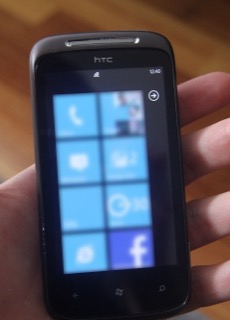 HTC 7 MozartWindows Phone
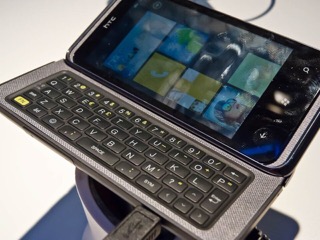 HTC 7 Pro / HTC Arrive (Sprint)Windows Phone
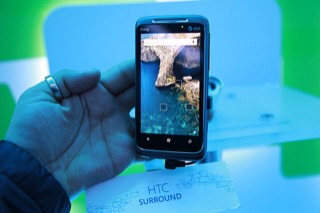 HTC 7 SurroundWindows Phone
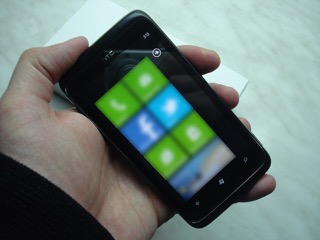 HTC 7 Trophy / Verizon TrophyWindows Phone
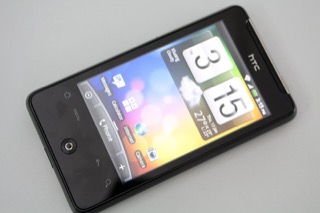 HTC Aria (Liberty) / HTC GratiaFrühes Android
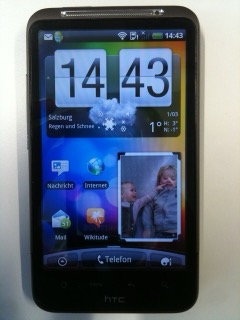 HTC Desire HD (Ace) / AT&T Inspire 4GDesire-Serie
Bereich: Die HTC-Desire-Serie (2010–2024) · Modellkatalog: 2010