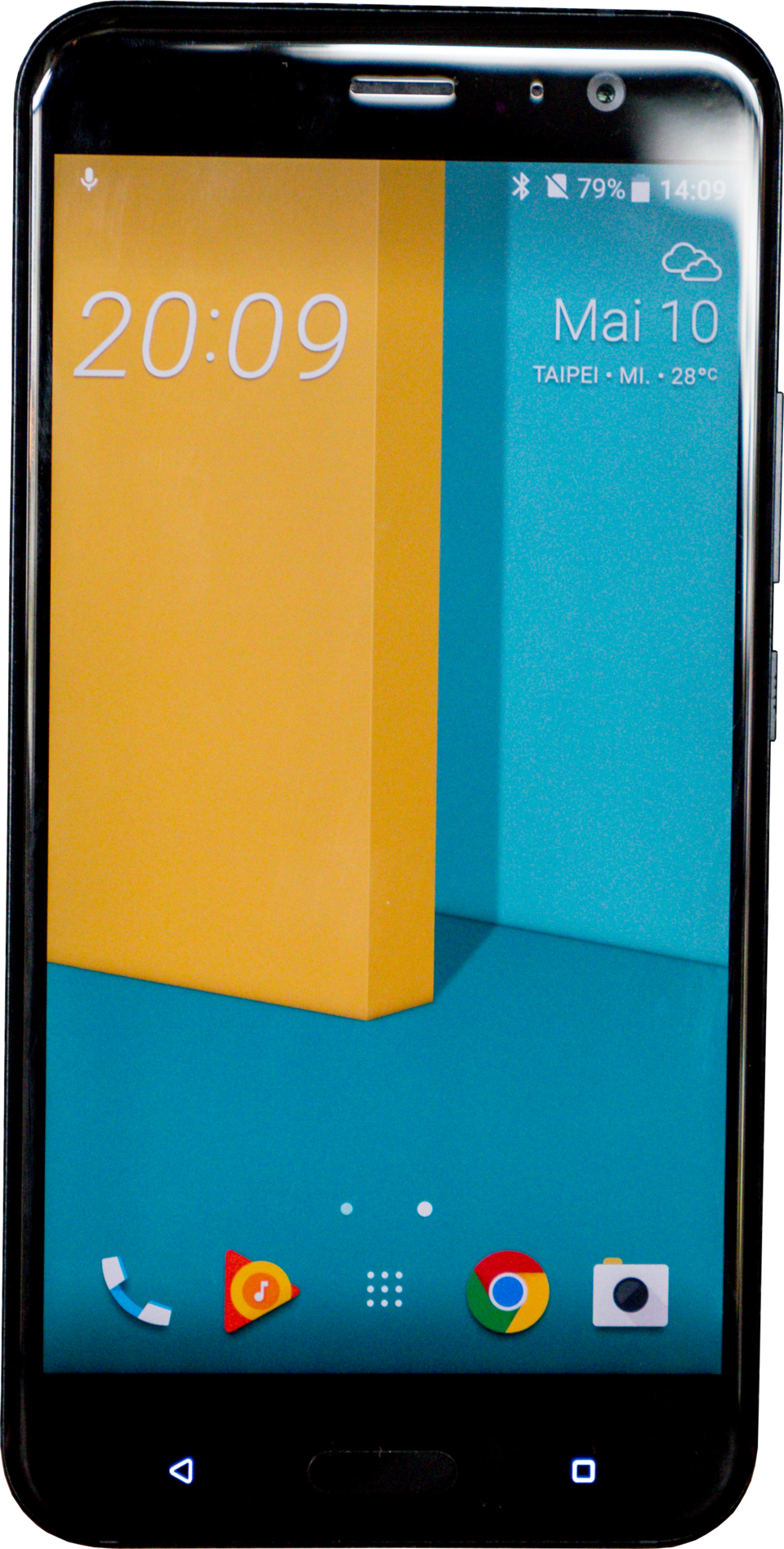
2 novembre 2017. Un U11 ingrandito con display Super LCD6 QHD+ 18:9 da 6,0", il primo HTC «senza cornici», batteria da 3930 mAh, lettore di impronte spostato sul retro, Snapdragon 835, 4/6 GB, 64/128 GB + microSD, UltraPixel 3 da 12 MP con OIS + frontale da 8 MP, Edge Sense, IP68, BoomSound Hi-Fi, USonic. Nato inizialmente come Google Pixel 2 XL (nome in codice muskie), ma Google scelse la versione di LG. La particolarità è il retro semitrasparente Translucent Black con gli interni in vista. Non venduto negli Stati Uniti. Android 8.0 → 9.0.
Caratteristiche
| SO | Android 8.0 → 9.0 + HTC Sense 9 → 10 |
|---|---|
| Processore | Qualcomm Snapdragon 835, 8 core |
| RAM | 4 / 6 GB |
| Memoria | 64 / 128 GB + microSD |
| Display | 6,0" 2880×1440 Super LCD6 18:9, Gorilla Glass 5 |
| Fotocamera | 12 MP UltraPixel 3 OIS + 8 MP |
| Particolarità | Edge Sense, IP68, Translucent Black |
| Audio | BoomSound Hi-Fi, USonic, senza 3,5 mm |
| Biometria | lettore di impronte sul retro |
| Batteria | 3930 mAh, QC 3.0 |
| Dimensioni | 158,5×74,9×8,5 mm, 188 g |
| Nome in codice | Ocean Master / muskie |
Dati da Wikipedia (en)
| Produttore | HTC |
|---|---|
| Serie | HTC U |
| Uscita | U11: 2017-06; U11+: 2017-11 |
| Tipo | Smartphone |
| SO | U11: Android 7.1 "Nougat" with HTC Sense 9.0; Android 8.0 "Oreo" with HTC Sense 9.0 (without Treble); Android 9.0 "Pie"; U11+: Android 8.0 "Oreo" (with Treble); Android 9 "Pie" |
| SoC | Qualcomm Snapdragon 835 |
| Processore | Octa-core (4× & 4×) Kryo |
| GPU | Adreno 540 |
| RAM | 4 or LPDDR4X RAM |
| Memoria | 64 or |
| Scheda di memoria | microSD up to |
| Display | U11: Super LCD5 capacitive touchscreen with Corning Gorilla Glass 5, 2560×1440 resolution (~534 ppi pixel density); U11+: Super LCD6 capacitive touchscreen with Corning Gorilla Glass 5, 2880×1440 resolution (~538 ppi pixel density) |
| Fotocamera posteriore | 12 MP (), f/1.7, OIS, UltraSpeed autofocus, dual-LED (dual tone) flash, geo-tagging, touch focus, face detection, auto-HDR, panorama |
| Fotocamera frontale | U11: , 1080p, auto-HDR; U11+: , 1080p, auto-HDR |
| Audio | HTC BoomSound Hi-Fi edition speakers; HTC USonic with Active Noise Cancellation; 3D Audio recording with 4 microphones; Hi-Res audio stereo recording; Hi-Res audio certified |
| Connettività | Wi-Fi: 802.11 a/b/g/n/ac, dual-band, Wi-Fi Direct, DLNA, hotspot; Bluetooth: v4.2, A2DP, LE; GPS: Yes, with A-GPS, GLONASS, BDS; NFC: Yes; USB: v3.1, Type-C 1.0 reversible connector (supports DisplayPort) |
| Input | Capacitive touch screen ; Edge Sense |
| Batteria | U11: 3,000 mAh Li-ion; U11+: 3,930 mAh Li-ion |
| Dimensioni | U11: 153.9 mm H ; 75.9 mm W ; 7.9 mm D; U11+: 158.5 mm H ; 74.9 mm W ; 8.5 mm D |
| Peso | U11: 169 g; U11+: 188 g |
| Predecessore | HTC 10 |
| Successore | HTC U12+ |
| Correlati | HTC U Play, HTC U Ultra |
| Altro | U11: IP67 protection; U11+: IP68 protection |
Da Wikipedia
HTC U11 è uno smartphone di HTC presentato ufficialmente il 16 maggio 2017 e messo in vendita a partire da giugno 2017.
Fonte: HTC U11 — Wikipedia (CC BY-SA 4.0)
Wikipedia (en)
The HTC U11 is an Android smartphone manufactured and sold by HTC as part of the HTC U series. It was announced on 16 May 2017 and succeeds the HTC 10 smartphone. In the United States, the HTC U11's major carrier is Sprint; however, it is also compatible with unlocked carriers, such as AT&T, T-Mobile, and Verizon.
Source: HTC U11 — Wikipedia (CC BY-SA 4.0)
Modelli correlati
Anche nel 2017
 HTC U Play (Alpine)Serie U
 HTC U Ultra (Ocean Note)Serie U
 HTC U11 (Ocean)Serie UHTC U11 Life (Ocean Life)Serie U
Sezione: Serie HTC U (2017–2024) · Catalogo modelli: 2017