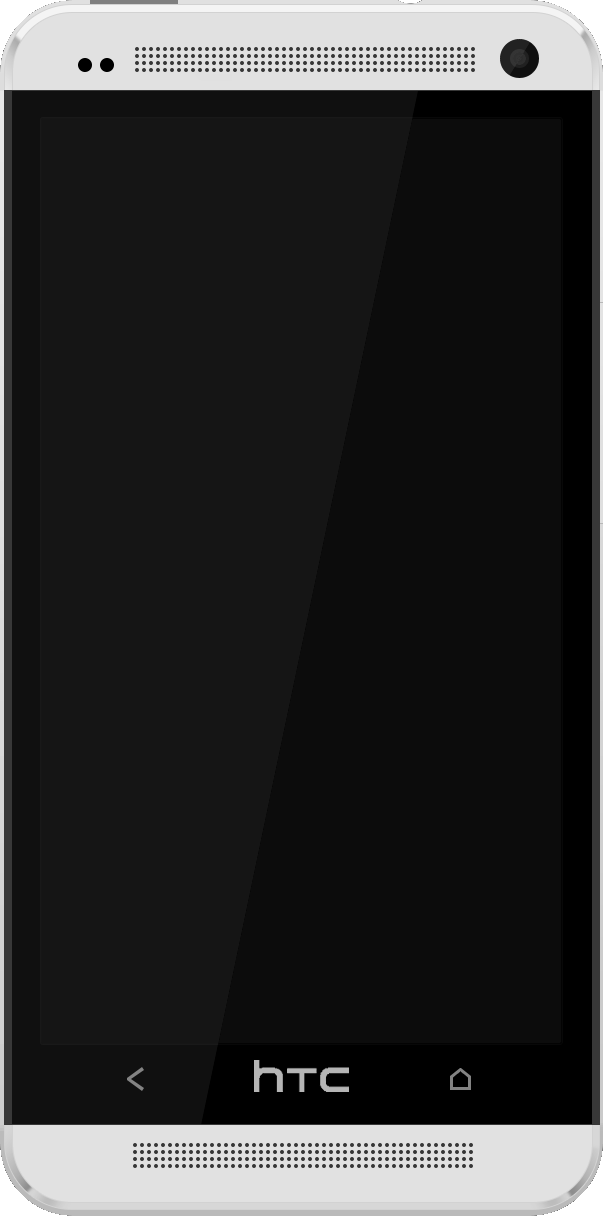
Am 19. Februar 2013 in London und New York vorgestellt, Verkauf ab März. Gehäuse aus einem einzigen Aluminiumblock mit „null Spaltmaß“ (Kunststoff wird in die Schlitze eingespritzt), 4,7" 1080p Super LCD3 (468 ppi) mit Gorilla Glass 2, Snapdragon 600 mit 1,7 GHz, 2 GB RAM, 32/64 GB. Drei zentrale Neuerungen: die UltraPixel-Kamera mit 4 MP (2,0-µm-Pixel, f/2.0, OIS), die frontalen BoomSound-Stereolautsprecher mit Verstärkern und die Oberfläche Sense 5 mit dem Feed BlinkFeed und der Funktion Zoe (3-sekündige Live-Fotos und automatische „Video Highlights“). Außerdem ein IR-Port im Einschaltknopf (Fernbedienung Sense TV), 2300 mAh, 143 g, 9,3 mm. Android 4.1.2 → 5.0.2 Lollipop (Sense 6). Silber, Schwarz, Rot, Blau, Gold. Wurde bei den GSMA Awards zum „Besten Smartphone 2013“ gekürt, doch es wurden nur ~5 Mio. Stück verkauft. Varianten: One Google Play Edition (reines Android), One Dual SIM (Asien, microSD), One mini, One max, Verizon One (mit Verzögerung bis August 2013).
Technische Daten
| OS | Android 4.1.2 → 5.0.2 + HTC Sense 5 → 6 |
|---|---|
| Prozessor | Qualcomm Snapdragon 600 APQ8064T, 4×1,7 GHz, Adreno 320 |
| RAM | 2 GB |
| Speicher | 32 / 64 GB, ohne microSD (Dual SIM – mit microSD) |
| Display | 4,7" 1920×1080 Super LCD3, 468 ppi, Gorilla Glass 2 |
| Kamera | 4 MP UltraPixel 2,0 µm, f/2.0, OIS, 1080p HDR + 2,1 MP 88° 1080p |
| Audio | BoomSound: 2 Frontlautsprecher mit Verstärkern, Beats |
| Konnektivität | LTE, HSPA+, Wi-Fi ac, Bluetooth 4.0, NFC, IR-Port, MHL, DLNA |
| Akku | 2300 mAh, fest verbaut |
| Abmessungen | 137,4×68,2×9,3 mm, 143 g |
| Codename | M7 |
Daten aus Wikipedia (en)
| Hersteller | HTC |
|---|---|
| Serie | HTC One |
| Codename | M7 |
| Veröffentlicht | 2013-03-22 |
| Typ | Smartphone |
| Bauform | Slate |
| Betriebssystem | Original: Android 4.1.2 Jelly Bean; Current: Android 5.0.2 "Lollipop" (HTC Sense); Current: Android 5.1 "Lollipop" (Google Play Edition); Unofficial: Android 11 via LineageOS |
| SoC | Qualcomm Snapdragon 600 APQ8064 |
| Prozessor | 1.7 GHz quad-core Krait 300 |
| GPU | Adreno 320 |
| RAM | 2 GB LPDDR2 RAM |
| Speicher | 32 or 64 GB |
| Speicherkarte | None (international), up to 64 GB microSDXC (China and Japan) |
| Display | 4.7 in Super LCD 3 with RGB matrix; 1920×1080p pixels (16:9 Aspect ratio) (468 ppi); Corning Gorilla Glass 2.0 |
| Hauptkamera | 4.0-megapixel, 2.0 μm camera with autofocus, UltraPixel BSI image sensor, smart LED flash, F2.0 aperture, 28 mm lens, dedicated imaging chip, continuous shooting, 1° optical image stabilization; 1080p HD video recording, video stabilization, slow motion video capture (768 × 432 pixels), HDR video recording |
| Frontkamera | 2.1-megapixel front camera (1080p for recording and video chat) |
| Audio | Qualcomm DAC |
| Konnektivität | Wi-Fi: 802.11 a/b/g/n/ac (2.4/5 GHz); GPS & GLONASS; NFC; Bluetooth: 4.0 with aptX; DLNA; Wi-Fi Direct; Miracast; Wi-Fi Hotspot; Infrared; USB 2.0 (Micro-B Port, USB charging); USB On-The-Go 1.3; MHL; HDMI (via MHL); Wireless HDMI; 3.5 millimetres (0.14 in) TRRS; FM-radio |
| Akku | 2,300 mAh Li-Po |
| Abmessungen | 137.4 mm H ; 68.2 mm W ; 9.3 mm D |
| Gewicht | 143 g |
| Vorgänger | HTC One X ; HTC Butterfly/Droid DNA |
| Nachfolger | HTC One (M8) |
| Verwandt | HTC One Mini ; HTC One Max |
| Sonstiges | Accelerometer, gyroscope, digital compass, proximity sensor, ambient light sensor |
Aus Wikipedia
Das HTC One ist ein Smartphone von HTC und besitzt einen 1,7 Gigahertz Qualcomm Snapdragon 600 (APQ8064T) Quad-Core-Prozessor mit 2 GB RAM. Der 4,7 Zoll (~11,9 cm) große Bildschirm löst mit 1920 × 1080 Pixeln auf und ist mit einem Gorilla Glass der 2. Generation geschützt. Das Betriebssystem ist Android 4.1.2 mit der Benutzeroberfläche HTC Sense 5.0, ein Update auf Android 4.4.3 („KitKat“) und HTC Sense 6.0 ist per Over-the-Air-Update verfügbar. Die Aktualisierung auf Android 5.0.2 „Lollipop“ erschien im Februar 2015 und soll das letzte große Update sein.
Quelle: HTC One — Wikipedia (CC BY-SA 4.0)
Wikipedia (en)
HTC One is a touchscreen-based Android smartphone designed, developed, and manufactured by HTC. The smartphone was unveiled on 19 February 2013 at press events in New York City and London and is HTC's seventh flagship smartphone. It has been hailed by many as a revolutionary Android handset with its premium design and build quality and its emphasis on high end audio. It is the successor to the company's 2012 flagship model, the One X—which was critically acclaimed, but commercially unsuccessful due in part to insufficient marketing efforts. To make the device stand out among its competition, HTC One was developed with a major emphasis on unique hardware and software features; which included a unibody aluminum frame, a 1080p full-HD display, dual front-facing stereo speakers, a camera with a custom image sensor and the ability to automatically generate montages of media, an updated version of HTC's Sense user experience, BlinkFeed—an aggregator of news and social network content, and an electronic program guide app with the ability to serve as a universal remote via an IR blaster located in the device's power button.
Source: HTC One (M7) — Wikipedia (CC BY-SA 4.0)
Verwandte Modelle
Ebenfalls aus 2013
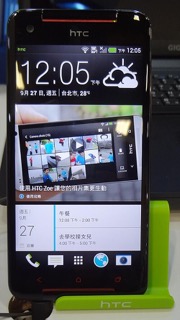 HTC Butterfly S (DLX Plus)Butterfly
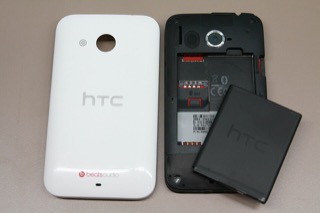 HTC Desire 200Desire-Serie
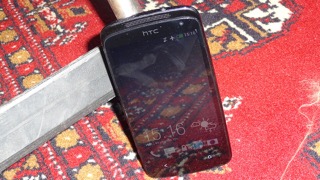 HTC Desire 500 (Z4)Desire-Serie
Bereich: Die HTC-One-Serie (2012–2016) · Modellkatalog: 2013