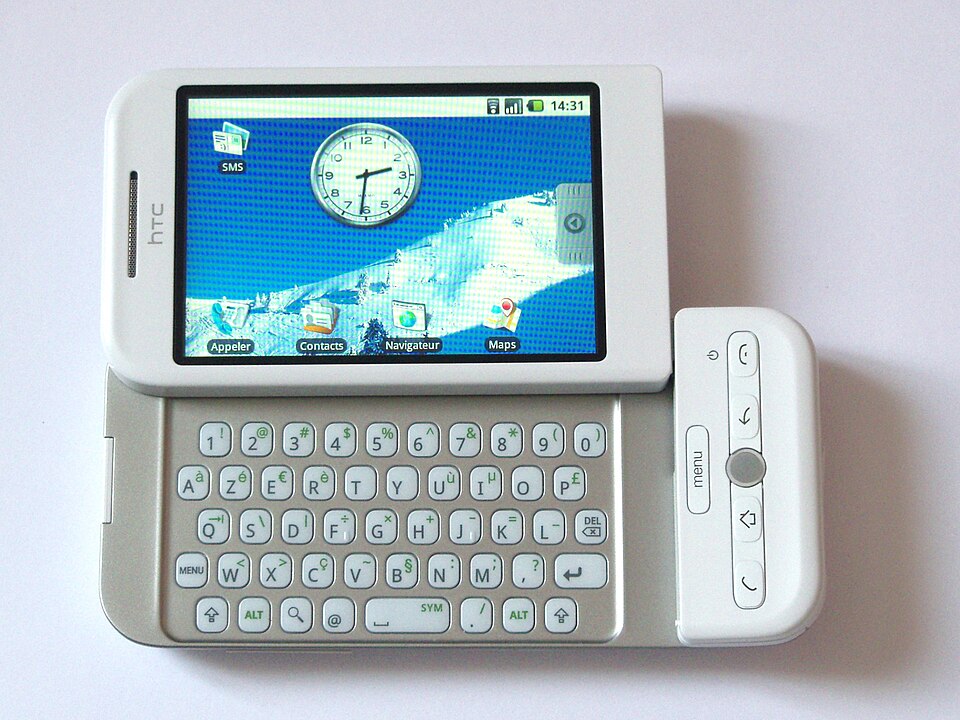
Pierwszy na świecie smartfon z Androidem. Zapowiedziany 23 września 2008 roku, w sprzedaży od 22 października 2008 w T-Mobile USA (179 USD z umową), w Wielkiej Brytanii od 30 października, w Europie jako HTC Dream od 2009 roku. Wysuwany ekran 3,2" HVGA z „podbródkiem”, 5-rzędowa klawiatura QWERTY, trackball, Qualcomm MSM7201A 528 MHz, 192 MB RAM, 256 MB ROM, aparat 3,2 Mpx bez lampy, bez gniazda 3,5 mm (ExtUSB). Android 1.0 → 1.6 Donut. Sprzedano ponad 1 mln sztuk w pierwszym półroczu. Android Dev Phone 1 — odblokowana wersja dla deweloperów.
Specyfikacja
| System | Android 1.0 → 1.6 (Donut) |
|---|---|
| Procesor | Qualcomm MSM7201A, 528 MHz |
| RAM | 192 MB |
| ROM | 256 MB, microSD |
| Ekran | 3,2" HVGA 320×480, pojemnościowy |
| Klawiatura | QWERTY, 5 rzędów, trackball |
| Aparat | 3,2 Mpx AF |
| Łączność | HSDPA, Wi-Fi b/g, Bluetooth 2.0, GPS |
| Bateria | 1150 mAh |
| Wymiary | 117×56×17 mm, 158 g |
| Nazwa kodowa | Dream |
Dane z Wikipedii (en)
| Producent | HTC |
|---|---|
| Premiera | 2008-10-20 |
| Konstrukcja | Slider smartphone |
| System | Original: Android 1.0; Last: Android 1.6 "Donut" |
| Procesor | 528 MHz Qualcomm MSM7201A ARM11 |
| RAM | 192 MB RAM |
| Pamięć | 256 MB |
| Karta pamięci | microSD, up to 16 GB |
| Ekran | px, 3.2 in, HVGA, 65,536 color TFT-LCD at 180 pixels per inch (ppi) |
| Aparat tylny | 3.15 megapixel, autofocus |
| Sterowanie | Capacitive touchscreen display, keyboard, trackball, volume controls, 3-axis accelerometer |
| Bateria | 1150 mAh; Internal rechargeable removable lithium-ion battery |
| Wymiary | 117.7 xx |
| Waga | 158 g |
| Poprzednik | Google Sooner |
| Następca | HTC Magic, HTC Desire Z (T-Mobile G2), Nexus One |
Z Wikipedii
G1 – smartfon zaprojektowany i produkowany przez HTC. Jest on pierwszym telefonem z systemem operacyjnym Android. Na terenie Polski Era miała wyłączność wśród operatorów komórkowych na sprzedaż tego urządzenia.
Źródło: G1 (telefon) — Wikipedia (CC BY-SA 4.0)
Wikipedia (en)
The HTC Dream is a smartphone developed by HTC. First released in October 2008 for US$179 with a 2-year contract to T-Mobile, the Dream was the first commercially released device to use the Linux-based Android operating system, which was purchased and further developed by Google and the Open Handset Alliance to create an open competitor to other major smartphone platforms of the time, such as Symbian, BlackBerry OS, and iPhone OS. The operating system offers a customizable graphical user interface, integration with Google services such as Gmail, a notification system that shows a list of recent messages pushed from apps, and Android Market for downloading additional apps.
Source: HTC Dream — Wikipedia (CC BY-SA 4.0)