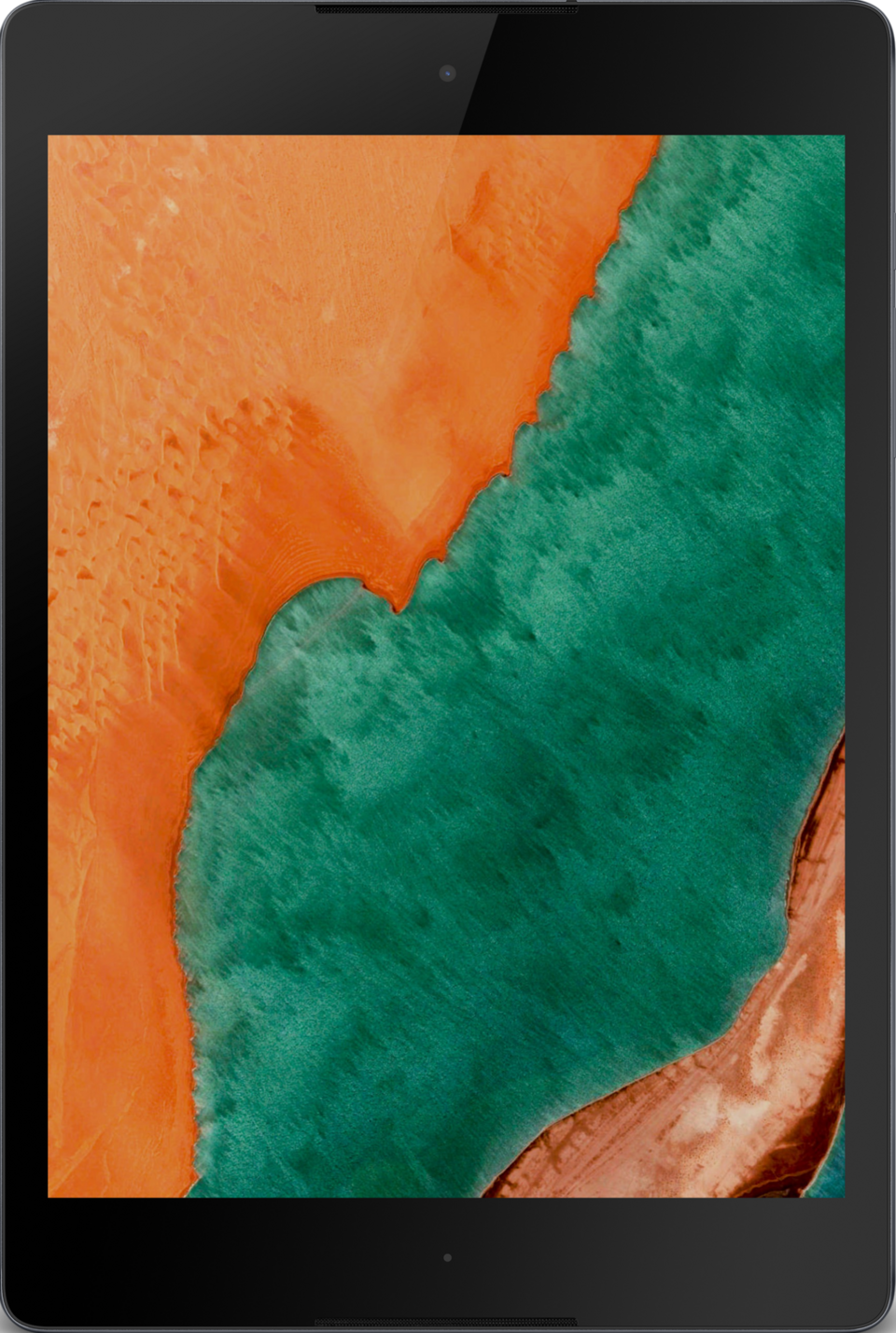
15 de outubro de 2014 (codinome flounder, "volantis"). O primeiro tablet da HTC depois do Flyer/Jetstream e o primeiro dispositivo com Android 5.0 Lollipop de 64 bits. IPS de 8,9" 2048×1536 (4:3), Nvidia Tegra K1 "Denver" de 64 bits e 2,3 GHz (2 núcleos), 2 GB de RAM, 16/32 GB, 8 MP f/2.4 sem OIS, frontal de 1,6 MP, alto-falantes estéreo frontais BoomSound, moldura de alumínio, plástico soft-touch, 6700 mAh, versão LTE. US$ 399/US$ 479/US$ 599. Capa-teclado magnética Keyboard Folio. Críticas: folga na tampa traseira, otimização fraca do Tegra K1, iluminação irregular. Vendas encerradas em 2016.
Especificações
| SO | Android 5.0 → 7.1.1 |
|---|---|
| Processador | Nvidia Tegra K1 Denver, 2×2,3 GHz, 64 bits, GPU Kepler com 192 núcleos |
| RAM | 2 GB |
| Armazenamento | 16 / 32 GB |
| Tela | 8,9" 2048×1536 IPS, Gorilla Glass 3 |
| Câmera | 8 MP f/2.4 + 1,6 MP |
| Som | BoomSound frontais |
| Bateria | 6700 mAh |
| Dimensões | 228,2×153,7×7,95 mm, 425 g (436 LTE) |
| Codinome | flounder / volantis |
Dados da Wikipedia (en)
| Fabricante | HTC |
|---|---|
| Descontinuado | 2016-05-26 |
| Tipo | Tablet computer |
| SO | Original: Android 5.0 "Lollipop"; Last: Android 7.1.2 "Nougat" |
| Processador | 2.3 GHz dual-core 64-bit Denver |
| RAM | 2 GB LPDDR3-1600 RAM |
| Armazenamento | 16 or 32 GB flash memory |
| Tela | 8.9 in 4:3 aspect ratio, 281 ppi pixel density 2048×1536 QXGA backlit IPS LCD, scratch resistant Corning Gorilla Glass 3 capacitive touchscreen |
| Câmera | Rear: 8 MP with flash; HD (1080p) resolution ; Front: 1.6 MP; HD (720p) resolution |
| Som | Dual front-facing speakers with HTC BoomSound |
| Conectividade | 3.5 mm combo headphone/microphone jack, Bluetooth 4.1, Wi-Fi (802.11 b/g/n/ac @ 2.4 GHz & 5 GHz Dual-band) (MIMO+HT40), Quad-band GSM, CDMA, Penta-band HSPA, LTE, NFC, Micro-USB 2.0 |
| Entrada | Multi-touch screen, accelerometer, gyroscope, GPS, magnetometer, dual microphone |
| Alimentação | Internal rechargeable non-removable lithium-ion polymer 3.8 Volt; V 25.46 Kilowatt hour; W·h (6,700 mA·h) battery |
| Dimensões | 228.25 mm (h); 153.68 mm (w); 7.95 mm (d) |
| Peso | 425 g (WiFi); 436 g (LTE) |
| Antecessor | Nexus 7 (2013); Nexus 10 |
| Sucessor | Pixel C |
Da Wikipédia
O Nexus 9 é um tablet co-desenvolvido pelo Google e HTC que executa o sistema operacional Android. É o quarto tablet da série Google Nexus, uma família de dispositivos de consumidor Android comercializados pelo Google e construídos por um parceiro OEM. O dispositivo está disponível em dois tamanhos de armazenamento, 16 GB por $399 e 32 GB por $479. Juntamente com o telefone celular Nexus 6 e o dispositivo de mídia digital Nexus Player, o Nexus 9 foi lançado com o Android 5.0 Lollipop, que oferecia vários novos recursos, principalmente uma aparência visual modificada e a substituição completa da máquina virtual Dalvik pelo ART. O Google incluiu uma etapa adicional para "Ativar desbloqueio OEM" antes que os usuários possam desbloquear o carregador de inicialização do Nexus 9.
Fonte: Nexus 9 — Wikipedia (CC BY-SA 4.0)
Wikipedia (en)
The Nexus 9 is a tablet computer co-developed by Google and HTC that runs the Android operating system. It is the fourth tablet in the Google Nexus series, a family of Android consumer devices marketed by Google and built by an OEM partner. The device is available in two storage sizes, 16 GB for US$399 and 32 GB for US$479. Along with the Nexus 6 mobile phone and Nexus Player digital media device, the Nexus 9 launched with 5.0 Lollipop, which offered several new features, notably a modified visual appearance, and the complete replacement of the Dalvik virtual machine with ART. Google has included an additional step to "Enable OEM unlock" before users can unlock the Nexus 9 bootloader.
Source: Nexus 9 — Wikipedia (CC BY-SA 4.0)